
Looking to start a T-shirt printing business but don’t have a printer? Don’t worry, you don’t actually need one. In fact, print-on-demand and drop shipping business models have made it possible to sell T-shirts without ever having to physically print them or keep an inventory. Print-on-demand is a relatively new business model that prints only when there is an order, allowing printing of single units or very few products without any loss. Drop shipping, on the other hand, lets third parties handle inventory and delivery. Combining these two business models provides an excellent opportunity for designers and entrepreneurs who want to start their own businesses. With low investment, minimum risk, and easy-to-use platforms like Shopify, you can build your own brand and generate passive income without worrying about inventory management or expensive equipment. However, it’s important to keep in mind that these business models come with their own limitations and fees, so you’ll need to do your research and be prepared to face some competition.
Print on demand
As the name suggests, this is a relatively new business model that prints only when there is an order. This allows printing of single units or very few products without loss. This method of production has only become popular in recent years due to the development of digital printing such as DTG printing.
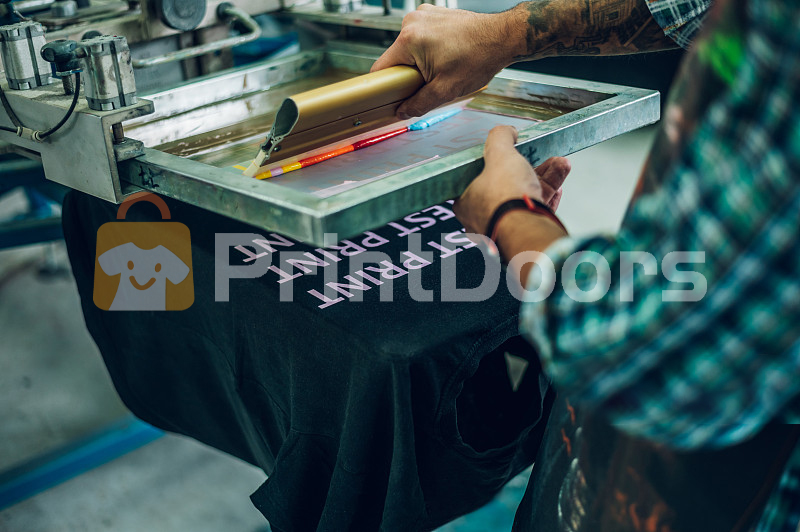
It used to be the case that to sell printed T-shirts – or anything else for that matter – you had to mass-produce them. It is simply not profitable for manufacturers to use traditional printing methods. Print on Demand provides an excellent opportunity for designers and entrepreneurs who want to start their own businesses.
Drop shipping
This is when companies let third parties handle their inventory and deliver. One piece has become popular because it takes on the responsibility of mass production for business owners, so they can focus on marketing.
When you combine a piece of consignment with print on demand, a world of possibilities opens up.
Benefit
Understand why so many people are joining these business models.
Passive income
One of the most attractive aspects of these new business models is the opportunity to run businesses that generate passive income. Imagine waking up to a message in your inbox saying you sold a T-shirt.
underinvestment
With on-demand printing and direct shipping, there is no need to spend money on printing presses or rent space to store all the inventory. The fee you will pay is the hosting fee (if you want your own domain) and the platform you choose to work with.
Minimum risk
Worried that your new venture might not succeed? Less investment, less risk. Since you don’t have a printing press, you won’t waste any money on it or its maintenance. In some warehouses there is no stock that does not accumulate dust. The only precious commodity here is time, and if the business doesn’t make a profit after you’ve invested all that time, then at least you’ve learned something.
Easy to use
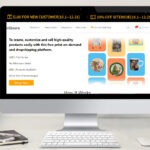
Shopify and other similar platforms offer very easy-to-follow instructions on how to set up your own online store. It can take less than an hour to create and publish a beautiful website. The Print doors website is also easy to access and can be seamlessly connected to any Shopify store.
Unlimited product
Keep in mind that the options will vary depending on the platform you are using, but in most cases there are no or few restrictions on the number of products you can sell in an online store. Since you won’t own any stocks, they won’t take up any space.
It’s not limited by location
With an online business, your customers can be virtually anywhere in the world. Of course, you need to keep in mind that the further the delivery distance, the more expensive the shipping costs.
Shortcomings
Printing on demand and shipping direct sounds great — and it is! — But nothing comes without a price.
Profit rate
Usually, print on demand and/or direct shipping platforms will charge you for the service. Sometimes, these are monthly fees, but more often than not, they get a cut of every item sold. Basically, you earn the difference between what the customer pays and what it costs you to complete the order.
Shipping can be expensive
Nothing in life is free. So when we see a message that says “free shipping,” it usually means that someone else is paying for it, or that you have paid for it in some shape or form. Direct shipping is convenient, but that doesn’t necessarily mean it’s affordable.
Related fees and extras
For the fees we have listed, we must add any applications that the platform may suggest you install. For example, if you use PayPal to process payments, they will also charge a fee.
Competition
The problem with a simple business model is that a lot of people do. Because of the popularity and accessibility of T-shirts, they are one of the best selling items on the Internet. If you want to get into this business, you’re going to face some stiff competition.
Limited customer service
Unfortunately, with these business models, your access to customer data is limited. When they call to complain about the quality of the final product or the late delivery, it may take a while for you to respond because first, you need to hear back from the supplier.
Fortunately, at Printdoor, we have a reputation for excellent customer service. Learn more about our Print on demand service.
The market vs. your own store
Selling on platforms such as Amazon and Etsy (marketplaces) means you will be able to leverage their online businesses. These dominators have millions of visits per month, which increases your chances of reaching your target audience. These platforms support one-piece generation, but they have their limitations. For example, they won’t let you contact the customer directly after purchasing. This can be a problem if you are building a database for your new business.
Shopify allows you to build online stores from scratch. They allow for greater flexibility and customize your website in any way you want, but at the same time the responsibility for marketing rests solely with you.
Note: If you want to learn how to set up your own online store, check out print doors’ blog post on the subject.
Build your own brand
In order to enjoy the full benefits of these business models and be successful, you need to build your own brand. As we’ve already mentioned, there’s a lot done there. Nowadays, everyone and their mother wants to sell things online, so in order to stand out, you need to find a unique voice and an appealing niche.
Your target audience
Thanks to the seemingly endless array of data analysis tools we have in this day and age, it’s easier than ever to research and target specific audiences. Google Trends is a great tool for finding out what people like, and Quora is a great place to see what everyone else is talking about.
Your design
It is suggested that if you are not a professional designer, please cooperate with a professional designer. T-shirt design seems to be the fallback career of the moment. It’s so easy to get lost in a group. To prevent this, the artwork must not only be authentic, but also well done. With so many choices, customers are spoiled and they need a good reason to stand up for you.
Conclusion
At Printdoors, we have always supported creative endeavors, which is why we are proud to announce our new “Print on Demand” service here.
With our five years of experience in the clothing printing industry, we are able to design a platform to meet the needs of artists and designers who want to start their own T-shirt collections. Printdoors’ “Print on demand” service has no minimum order requirement and can print any design with no color restrictions.
From the moment you connect an online store such as Shopify to our platform, anyone can buy one of your designs.
Why worry about inventory or logistics when we can fix it? We deal with the boring stuff so you have more time to do the things you love. For more information, just visit the printdoors website.